Enneagram 6w5 — The Defender

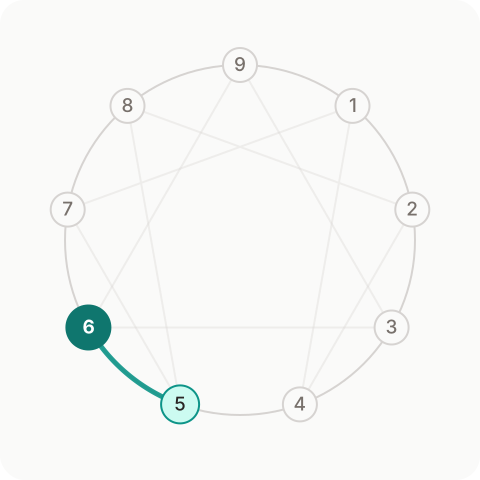
The Six’s vigilance turned quiet by the Five’s reserve: self-contained, serious, analytical under pressure. The 6w5 builds security through competence and careful independent thinking.
The core pattern here is Type 6 — The Loyalist; the wing colors it, never replaces it.
In daily life
Daily life is preparation in a quiet room: the 6w5 reads the contract, checks the source, knows the exits — vigilance turned scholarly. Under pressure it goes silent and solves; its calm in actual crisis surprises everyone who watched it worry about hypothetical ones.
In love
In love, the 6w5 is faithful and reserved — devotion proven by staying, not by speeches. The friction: worry expressed as withdrawal reads as distance right when the partner senses trouble. What helps: narrating the inner weather in headlines (‘anxious today, not about us’) so silence stops being a screen for projection.
At work
At work it’s the institution’s memory and its stress-test: the person who knows why the rule exists and what happened last time. Risk: gatekeeping — expertise deployed to slow everything into safety. The fix: pre-deciding which risks are yours to veto and which are only yours to flag.
The growth edge
Growth means borrowing courage from its own record: the file of survived crises is the authority it keeps seeking elsewhere. The practice: before consulting anyone, write your own verdict first — then compare.
How to recognize it
- You know the contract’s weak clause and the building’s second exit
- Your worry works in silence — colleagues see only the preparedness
- Real crises calm you; hypothetical ones exhaust you
At its best, under pressure
At its best, the 6w5 is the guardian of what matters — deep competence in service of safety, the person institutions trust with their hardest verifications. Under pressure vigilance turns inward and armored: trust contracts to almost no one, knowledge hoards as defense, and the quiet becomes a bunker. The repair is voiced worry — the concern shared while it’s still a question, not yet a fortress.
The tradition’s portrait: the Defender
The tradition names this subtype the Defender: the Six’s capacity for organization and personal engagement joined to the Five’s perceptiveness and focus. Healthy 6w5s develop technical expertise and are prized as practical problem solvers — drawn to medicine, law, engineering: fields where a knowable system of rules can be mastered. The tradition highlights two signatures. First, concentration: this subtype has greater powers of focus and foresight than the 6w7, reading environments — especially people — with shrewd precision, and putting a premium on foresight: the 6w5 has usually rehearsed the crisis before it arrives, which is why it handles the real one calmly. Second, the name’s meaning: a strong identification with the underdog. The 6w5 becomes spokesperson and champion for the disadvantaged, its vigilance turned outward as protection — the community’s careful advocate, the union’s quiet counsel.
When the balance tips
The average band narrows. The Five wing pulls the Six’s anxiety inward: fewer confidants, tighter concerns, a suspicion that documents itself — files kept, precedents remembered, positions defended past the point anyone was attacking. The tradition’s noted risk is narrowness: the 6w5 can become so focused on its system and its threats that perspective shrinks to case law, and the dry humor curdles toward cynicism. Where the 6w7 discharges anxiety socially — venting, joking, calling a friend — the 6w5 compresses it into analysis, which means nobody sees the pressure building until the position is bunkered. The growth lever: report the worry before the research is complete. Sharing a half-formed fear with one trusted person is this subtype’s precise stretch — it trades the Five wing’s armored certainty for the alliance the Six actually runs on. The rule of thumb: if the file on a worry is thicker than the conversations about it, the balance has already tipped.
6w5 vs 6w7
The cleanest contrast is with the other wing: read 6w7 side by side with this page. One of the two descriptions will feel like home; some people genuinely draw on both — that’s called balanced wings, and it’s a real result, not a failure to decide.
Not sure about your wing?
The test includes a wing-finder that separates 6w5 from 6w7 — or tells you honestly when your wings are balanced.
Frequently asked questions
Is 6w5 more Six or more Five?
More Six: security is the project. The Five wing pursues it through competence and self-sufficiency rather than through alliances.
What careers fit a 6w5?
Security, compliance, research, forensics, infrastructure — roles where institutional trust is earned through depth.
How do I tell a 6w5 from a Five?
Ask what the knowledge is for. The Five knows in order to be capable; the 6w5 knows in order to be safe. The Six's files have threat models.
How does a 6w5 behave in relationships?
Loyal and slow to open: trust built through years of evidence, worries processed internally before being shared. Partners should announce changes early — surprises read as threats to this wing.
What's the 6w5's growth edge?
Sharing the half-formed fear: reporting a worry before the research on it is complete. The armored certainty is the Five wing's contribution; the alliance the Six actually runs on requires earlier disclosure.
Know your enneagram type. Understand yourself.
Take the free test