Wing Finder
Which neighbor colors your type — or are your wings balanced? Built into the free test, honest about ties.
Take the free test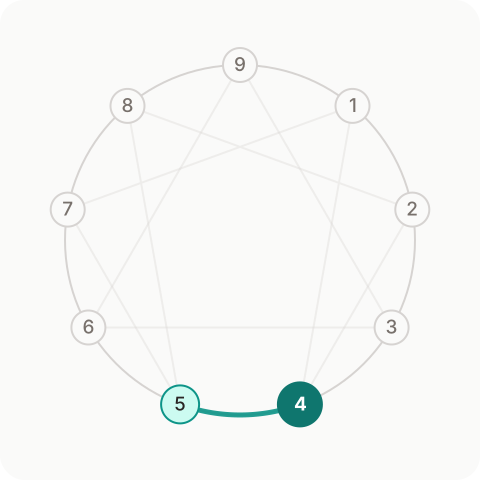
Find which neighbor flavors your core type — 4w3 or 4w5, 9w1 or 9w8 — or learn, honestly, that your wings are balanced. The wing finder runs inside the free test: once your core type is established, dedicated items compare you against both neighbors and report the lean.
What it measures
The wing is your type’s style layer: same core fear and desire, different toolkit. The finder’s items target where wings actually diverge — failure modes, work style, conflict behavior — rather than surface preferences. Three items per neighbor, forced-choice, designed so the flattering answer and the true answer aren’t the same thing.
Honest about ties
Some people genuinely draw on both wings — balanced wings are a real configuration, not indecision — and forcing a pick would be the dishonest reading. When the signal is close, the finder says balanced and links both wing pages: reading the two portraits side by side settles what items can’t, because wings show clearest in how you go wrong — the failure modes diverge where the virtues blur.
What you get
Your wing notation (e.g., 6w5), the lean’s strength, and the direct path to your wing’s full page — each of the eighteen wing pages covers daily life, love, work, the growth edge, and the contrast with the sibling wing. If your type result came back at moderate clarity, the finder deliberately waits: wing questions only mean something once the core type is right; comparing yourself against the wrong neighbors produces confident nonsense.
Free, part of the test
The wing finder is part of the free test — no separate tool, no account needed. It runs automatically after your type result and appears in the same report, ready to link you onward to your wing page.
A worked sample
Your type comes back Four, high clarity. The wing items then compare you against Three and Five: do you process a setback by producing something (3-side) or by retreating to understand it (5-side)? Is your presentation curated for an audience or indifferent to one? The result: 4w5, moderate lean — with the note that your answers showed real Three-wing capacity under deadline. You read the 4w5 page, the Bohemian portrait lands, and the ‘brilliant flashes, trouble sustaining’ line explains a decade of unfinished projects in one sentence.
Who it’s for
Anyone whose type is settled but whose style questions remain — why you and your same-type friend diverge so visibly. People stuck between two adjacent types (a wing question in disguise: the mistype pages handle real adjacency ties). And returners from other tests that assigned a wing without evidence: this one shows its reasoning and admits balance when balance is true. A wing you can’t verify against your own failure modes is decoration; a verified one is a working map.
Wing Finder
Take the free testFrequently asked questions
Do I take the wing finder separately from the test?
No — it's built into the free test and runs automatically after your core type is established. One sitting, one report, both layers of your result delivered together.
What does 'balanced wings' mean in my result?
That your answers drew roughly equally on both neighbors — a genuine configuration, not a tie-break failure. Read both wing pages; many balanced-wing people shift emphasis between them across life seasons.
Can my wing result be wrong if my type is wrong?
Yes — wing questions compare you against your type's specific neighbors, so a mistyped core produces meaningless wing data. Settle the type first; the finder is only as good as that foundation.
Why does my wing feel different than it did years ago?
Common and expected: many people lean one wing earlier in life and develop the other later. The core stays; the emphasis moves. Retest when a major life season changes.
Which wing is better for my type?
Neither — wings are styles, not grades. Each has its own gifts and failure modes, mapped on its page. The useful question is which one you actually run, not which sounds better.