Mistype Resolver
Torn between two types? See the head-to-head differences — engines, tells, and the questions that settle it. Free.
Open the resolver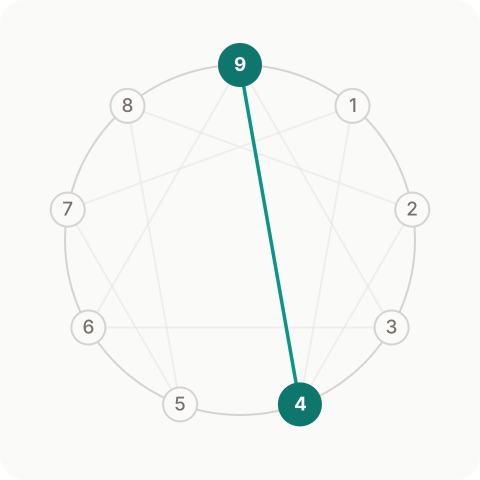
Torn between two types? This is the tiebreaker. Pick your two candidates and the resolver shows them head-to-head: the different engines under the shared surface, why the confusion happens for this specific pair, and the two or three questions that settle it.
How it works
Every commonly-confused pair confuses for a mappable reason — shared wing zones (1 vs 2), arrow connections (a stressed One reading as Four), or surface lookalikes with unrelated engines (1 vs 3). The resolver draws on our 36 comparison pages: for your pair, it presents the engine contrast, the tradition’s documented tells, what each type looks like under load (the disguise that causes most mistypes), and the countertype check — because one subtype per type resembles other types by design.
The questions that settle it
Behavior comparisons rarely resolve a tie — the behaviors are exactly what the two types share. The resolver’s questions target the fork underneath: which fear has been running your whole life, which success would actually let you rest, what leaks out despite you. Most ties break within the first two questions; the stubborn ones usually turn out to be a subtype situation, and the resolver says so and points to the subtype test.
Free, like the test
The resolver is free — a tie you can’t break is a test result we didn’t finish delivering, so this tool is part of the deal. Take the test first if you haven’t: the resolver works best on the specific two candidates your result names, where the discriminating questions have real leverage.
When you’re still stuck
Some ties resist a sitting — usually stress-season interference or a countertype pattern. The resolver’s fallback path: retest in a calmer month, read both full profiles for the wince rather than the fit, and check your candidates’ countertypes. The mistyping guide covers the complete protocol.
A worked sample
Your test returned Eight, moderate clarity, Six runner-up. The resolver loads the 8-vs-6 comparison and leads with the tradition’s cleanest tell: the rehearsal. Before a confrontation, do you simply have it (Eight) — or rehearse it the night before and replay it after (Six)? You recognize the rehearsal instantly. Second question — is your boldness appetite or armor? — confirms it. Result: counterphobic Six hypothesis, with the SX6 countertype page linked. Ten minutes, and a mistype that would have sent you growth advice for the wrong type gets caught before it cost anything.
Who it’s for
Anyone with a moderate-clarity test result — the runner-up deserves this ten-minute check. People who’ve identified with two types for years without settling. And re-typers: if you’ve changed your self-typing before, run your old and new types through the resolver — the head-to-head usually shows which switch was a correction and which was flattery. Ties are information, not failure — and this tool is how they pay out.
Mistype Resolver
Open the resolverFrequently asked questions
Which type pairs does it cover?
All 36 combinations — every pair of distinct types has a dedicated comparison, since any two can tie for specific people (wing zones, arrow lines and countertypes each produce different confusions).
Why did my test give me two candidates at all?
Because the honest reading of close scores is a tie, not a coin flip. Moderate-clarity results name the runner-up so you can resolve it by reading — this tool structures exactly that resolution.
What if I'm torn between three types?
Resolve pairwise, starting with the two highest: the winner plays the third. Three-way ties usually mean stress-season interference — consider retesting calm before resolving.
Can the resolver be wrong?
It presents evidence, not verdicts — the settling is yours. Its questions have known failure modes (aspirational answering, mid-crisis states), which is why the fallback path exists: retest calm, read for the wince, check countertypes.
Is this the same as reading the mistype pages?
Same corpus, structured as a decision path: the pages teach each pair fully; the resolver sequences the discriminating questions for your specific tie and routes you onward based on the answers.