SX 6 — One-to-One Six: 'Strength'

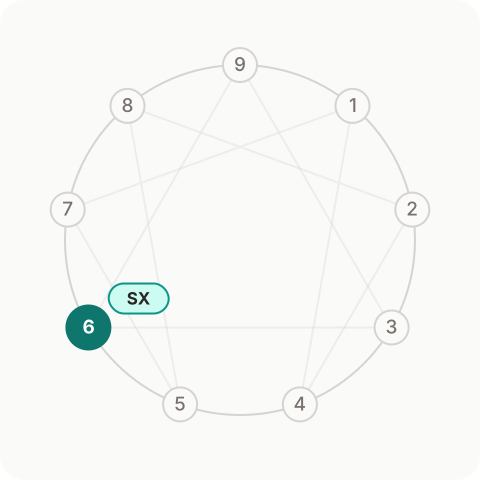
Chestnut names this subtype Strength/Beauty, and marks it the countertype of the Sixes — the famous counterphobic Six. Its programming is the tradition’s cleanest inversion: when afraid, the best defense is a good offense. This Six goes against fear by becoming strong and intimidating — holding the enemy at a distance through visible readiness.
How the instinct bends the passion
Fear filtered through the one-to-one instinct converts to attack posture: trusting themselves more than others (unlike both other Sixes), SX Sixes allay anxiety through skill and readiness — the trained body, the sharp tongue, the martial art, the commanding look. The name’s two halves are the two languages of the same defense: strength (the power to repel) and beauty (the power to disarm). Either way, the threat is met before it arrives.
What it looks like in daily life
The SX Six rides the motorcycle, takes the krav maga class, asks the aggressive question in the town hall. It probes authority reflexively — bosses are tested early — and it defends underdogs with a ferocity that looks like Eight. But the vigilance underneath is pure Six: the SX Six rehearses the confrontation beforehand and replays it after, which the genuinely fearless never do. Rest is hard; readiness has no off switch.
A scene that gives it away
The dark parking garage. An ordinary type quickens its step; the SX Six slows down, squares its shoulders, and walks toward the shadow it clocked — daring the threat to be real. Nine times of ten there’s nothing there. The tenth time, the SX Six was ready. That readiness is the whole personality in one gesture: fear managed by hunting it.
Against the other two Sixes
The SP Six makes friends with the danger’s witnesses; the social Six learns the rules that keep danger sued. The SX Six charges: the only Six that looks fearless, which is exactly why it’s the countertype — the fear is identical; the response is inverted.
How it gets mistyped
This is the enneagram’s classic mistype: SX Six as Eight. The tells, per the tradition: the Eight barely thinks about threats and acts without rehearsal; the SX Six thinks about threats constantly and its boldness is a performance against them. Eights relax when in control; SX Sixes rarely relax at all. Its intensity can also read as Four, but the Four’s turbulence is about identity — the SX Six’s is about safety.
In love and at work
At work this subtype is the crisis-hire: fearless-looking in confrontation, superb under attack, restless in peacetime. It tests institutions the way it tests bosses, and stays loyal to the ones that pass. In love it tests hardest of all: provocations, loyalty exams, the push that asks ‘will you leave?’ hoping to hear no. Partners who stand their ground — without counterattacking — earn a fierce, permanent alliance. The relationship transforms when the Six announces the test instead of running it covertly.
Growth notes
The edge is admitting fear in words — ’this scares me’ said once a week to one trusted person — because the entire pattern exists to make that sentence unnecessary. The deeper work is noticing the rehearsal and the replay: the counterphobic show has a nervous scriptwriter. The virtue is courage in its true form: fear felt, named and walked with — no longer needing to be beaten out of sight.
Frequently asked questions
Why is SX 6 the countertype of Type 6?
Because it inverts fear's usual expression: instead of seeking protection, the counterphobic Six attacks what frightens it — becoming strong and intimidating so threats keep their distance. Same fear, opposite response.
What does 'Strength/Beauty' mean?
The two languages of the same defense: strength repels threats, beauty disarms them. Both are ways of meeting danger before it arrives — a powerful stance in what this Six does and how it looks.
How do I tell a counterphobic Six from an Eight?
Check for the rehearsal and the replay. The Eight confronts without preparation and forgets it after; the SX Six rehearses the confrontation beforehand and replays it at night. Eight boldness is appetite; Six boldness is armor.
Why does the SX Six test its partners?
The tests ask the question it can't voice: 'will you stay?' Provocations and loyalty exams probe the bond's strength. Partners who hold ground without counterattacking pass — and announcing tests openly is the growth move.
What's the growth practice for an SX Six?
Saying 'this scares me' once a week to a trusted person. The entire pattern exists to make that sentence unnecessary — which is exactly why practicing it dissolves the armor from inside.
Know your enneagram type. Understand yourself.
Take the free test