SX 3 — One-to-One Three: 'Charisma'

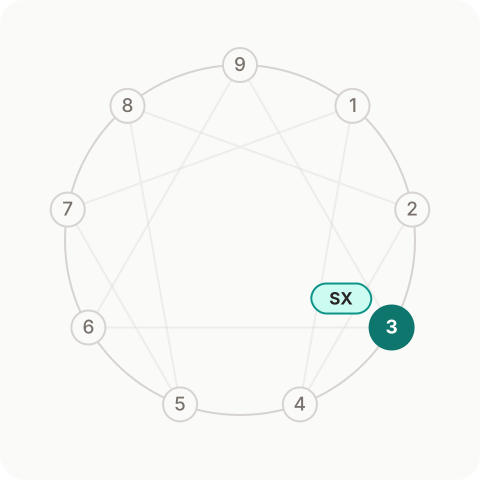
Chestnut names this subtype Charisma: the sexual Three pursues achievement through personal attractiveness and through supporting important others. Its vanity sits midway between the SP Three’s denial and the social Three’s embrace — employed, as the tradition puts it, in creating an attractive image and promoting the people it has chosen to champion.
How the instinct bends the passion
Vanity filtered through the one-to-one instinct becomes a relational production: this Three wins by being irresistible to specific important people and by making its chosen ones win. It has a family-and-team mentality, pours energy into pleasing, and — the tradition’s telling detail — has a hard time talking about itself. The achievement drive is intact; it’s simply been delegated: the partner’s career, the star client, the candidate, the band. Their success is its trophy, worn at one remove.
What it looks like in daily life
Physically polished — this is often the most deliberately attractive person in the room — and conversationally selfless: ask about its year and within two sentences you’re discussing its spouse’s promotion or its mentee’s launch. The support is skilled and total: connections made, materials edited, confidence coached. What’s missing, on inspection, is a first-person ambition anyone can name — including the SX Three itself.
A scene that gives it away
The launch party for the partner’s book. The SX Three planned it, looks perfect at it, and delivers a toast so generous the room tears up. Someone asks, kindly, ‘and what are you working on?’ Watch the flicker — a half-second of static — before the answer redirects: ‘oh, this year was really about getting this book out.’ The deflection isn’t modesty. It’s that the first-person answer doesn’t exist yet.
Against the other two Threes
The SP Three proves worth by being good; the social Three by being seen winning. The SX Three proves it by being chosen — the beautiful, indispensable other half of somebody important. It’s the most relational Three and the one whose vanity most resembles love.
How it gets mistyped
The other-focus and the pleasing read as Two: supportive, warm, dedicated to the beloved’s flourishing. The tell is the currency — the Two wants to be needed by the beloved; the SX Three wants to be impressive to and through them: the support builds a winning team with the Three as its attractive engine. The aesthetic attention can also read as Four, but the Four curates an interior; the SX Three curates a presentation.
In love and at work
At work this subtype shines in the second chair that runs the show: agent, producer, chief of staff, campaign manager — the career built on making stars. The risk is resentment with no legal standing: it chose the supporting role and can’t complain about the billing. In love it is devoted, gorgeous and subtly absent — the partner eventually notices they’ve never met the person under the presentation. The turn: the SX Three saying ‘here’s what I want,’ in first person, before checking what the beloved wants to hear.
Growth notes
The edge is first-person desire: one sentence a day that begins with ‘I want’ and isn’t about the team. The deeper work is tolerating being seen unpolished by the very person whose gaze matters most. The virtue is honesty — starting with the discovery that it had preferences all along, filed under other people’s names.
Frequently asked questions
Why is the sexual Three called 'Charisma'?
Because its achievement strategy runs through personal attractiveness and magnetism: being irresistible to important others and making its chosen people win. The vanity works at one remove — through the team, the partner, the star.
Is the SX Three the countertype?
No — the countertype is the SP Three ('Security'). The SX Three neither denies vanity nor parades it; it employs it relationally, in its presentation and in promoting the people it champions.
How do I tell an SX Three from a Two?
Follow the currency. The Two supports to be needed and keeps a ledger of care; the SX Three supports to build a winning, attractive team — its identity rides on the chosen one's success, not on being indispensable.
Why can't SX Threes talk about themselves?
The first-person ambition got delegated early: worth was proven by being chosen and by the chosen one's wins. Asked directly what they want, many SX Threes genuinely draw a blank — the answer was filed under someone else's name.
What's the growth practice for an SX Three?
First-person desire: one daily sentence starting 'I want' that isn't about the team, and letting the most important person see them unpolished. The gaze survives — which is the proof this subtype needs.
Know your enneagram type. Understand yourself.
Take the free test