SP 7 — Self-Preservation Seven: 'Keepers of the Castle'

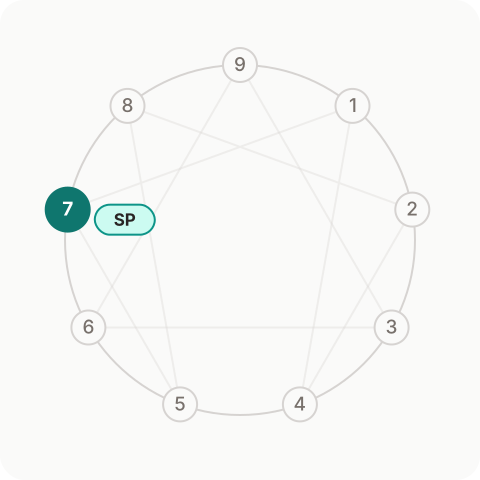
Chestnut names this subtype Keepers of the Castle: the self-preservation Seven expresses gluttony through making alliances and spotting opportunities — a pragmatic, self-interested Seven that finds safety through networking and stays permanently alert to whatever supports its survival. Cheerful, amiable, pleasure-loving — and remarkably good at getting what it wants.
How the instinct bends the passion
Gluttony filtered through self-preservation becomes opportunism in the neutral sense: an eye that never stops scanning for advantage, and a partisan network of allies through which needs get met. The castle in the name is built of people and options: good contacts, favorable deals, an insider’s map of where the resources are. This Seven’s appetite has a practical spine — it wants the pleasure AND the security that guarantees more pleasure later.
What it looks like in daily life
The SP Seven knows a guy for everything. It books the trip with points, gets the reservation through a friend, hears about the job before it’s posted. Generous within the network and alert to reciprocity, it keeps its options deliberately plural — jobs, plans, even relationships carry a quiet backup. The cheerfulness is real; so is the ledger underneath it.
A scene that gives it away
The dinner where the restaurant is fully booked. Within four minutes the SP Seven has texted two contacts, secured a corner table ‘as a favor,’ and befriended the maître by name for next time. The party is delighted. Nobody notices the network just grew by one node — except the SP Seven, who files it precisely.
Against the other two Sevens
The social Seven sacrifices its appetite for the group’s; the SX Seven dreams past reality entirely. The SP Seven stays on the ground: the most practical, most materially-minded of the three — appetite with an investment strategy.
How it gets mistyped
The networking warmth reads as Two; the pragmatic hustle as Three or even Eight. Against Two: the Two bonds to be needed; the SP Seven bonds to keep options open — the warmth is real but the exits stay marked. Against Three: the Three wants the win recorded; the SP Seven wants the experience banked and the next one queued.
In love and at work
At work this subtype is the natural dealmaker and connector — sales, partnerships, procurement, anywhere the rolodex is the asset. The risk: commitments held lightly on all sides eventually read as unreliability. In love it is fun, resourceful and slightly slippery: plans stay flexible, futures stay plural, and the partner eventually asks the question the pattern dreads: ‘is there a version of this where you close the other doors?’ The relationship deepens exactly there.
The tradition calls this Seven cheerful and amiable — and notes it tends to get what it wants: the network works, which is why the pattern never questions itself.
Quick self-check
- Do you keep a quiet backup for jobs, plans — even relationships?
- Is your network partly a pantry: stocked against a deprivation that never quite arrives?
- Does closing a door for good — no parallel option — feel physically uncomfortable?
A note for partners and colleagues: the plural options aren’t disloyalty — they’re an old insurance policy against deprivation. What retires the policy isn’t demands for commitment but evidence, repeated, that this particular door is worth every other door it closes.
Growth notes
The edge is the closed door: one commitment made irrevocable on purpose — no backup, no parallel option. The deeper work is noticing that the network was built to guarantee against a deprivation that has long since stopped being imminent. The virtue is sobriety: enough, savored, with no reservation held elsewhere.
Frequently asked questions
Why is the SP Seven called 'Keepers of the Castle'?
Because it builds safety from a partisan network of allies and opportunities: contacts, favors, insider knowledge and plural options form the castle that guarantees its needs will always be met.
Is the SP Seven the countertype?
No — the countertype is the social Seven ('Sacrifice'), which goes against gluttony by serving others. The SP Seven runs with the appetite: pragmatic, opportunity-alert, pleasure-loving.
How do I tell an SP Seven from a Two?
Watch the exits. The Two bonds to become needed and stays; the SP Seven bonds warmly while keeping options marked — the network exists to serve its security, not to make it indispensable.
Is the SP Seven's networking manipulative?
It's reciprocal and genuinely warm — favors flow both ways and the cheer is real. The pattern's cost isn't dishonesty; it's commitment held lightly everywhere, which eventually reads as unreliability.
What's the growth practice for an SP Seven?
The deliberately closed door: one commitment made irrevocable — no backup option, no parallel plan. Sobriety arrives as 'enough, savored,' with no reservation held elsewhere.
Know your enneagram type. Understand yourself.
Take the free test