SP 3 — Self-Preservation Three: 'Security'

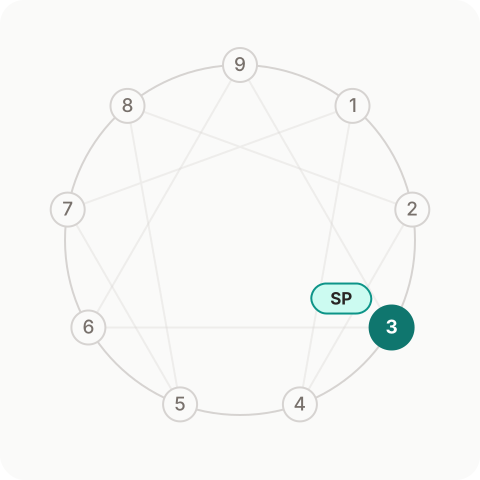
Chestnut names this subtype Security, and marks it the countertype of the Threes. Its formula is the tradition’s most elegant paradox: a vanity for having no vanity. The SP Three wants admiration like every Three — but openly seeking recognition would be vain, and vanity is bad form. So it strives not just to look good but to be good: the perfect model of how a person should be, modest included.
How the instinct bends the passion
Vanity filtered through self-preservation goes underground and converts to virtue: security is sought through being good, working hard, and being effective and productive. This Three doesn’t sell an image — it is the résumé: reliable, self-sufficient, quietly excellent, financially careful. The self-deceit runs one level deeper than in the other Threes: it deceives itself about the performance itself, sincerely believing it doesn’t care about applause while structuring its entire life to deserve it.
What it looks like in daily life
The SP Three works more hours than anyone and mentions it less. It’s the small-business owner whose books balance, the parent whose kids’ schedules run like logistics, the colleague promoted for being indispensable rather than visible. Praise is deflected with visible discomfort — and its absence is registered with invisible precision. Security is the stated goal: savings, insurance, backup plans — achievement wearing prudence’s clothes.
A scene that gives it away
The team wins an award. The SP Three, who did most of the work, arranges for the junior colleague to accept it, stands at the back during photos, and says ‘it was a team effort’ — sincerely. That night it can’t sleep, replaying whether the boss knows who actually did what. The modesty was real. So was the need it denied.
Against the other two Threes
The social Three climbs in public — stage, titles, visible wins. The SX Three becomes attractive and promotes its chosen people. The SP Three refuses both displays and outworks both quietly — the Three most likely to insist, honestly and wrongly, that it isn’t competitive.
How it gets mistyped
The modesty plus work ethic reads as One: dutiful, correct, self-effacing. The tell: the One works to satisfy an inner standard and shows irritation when quality slips; the SP Three works to be seen as (and thus safely be) the good, effective person — and shifts approach fluidly when the audience’s definition of ‘good’ changes. It also reads as Six: security-focused, reliable. But the Six seeks safety in alliances; the SP Three seeks it in its own performance.
In love and at work
At work, this is the engine-room leader: overdelivering, underclaiming, allergic to schmoozing yet somehow always promoted. In love, the SP Three provides — impeccably — and struggles to be met, since needing comfort would breach the self-sufficient image. Partners report admiring them for years before ever seeing them tired. The turn comes when being fine stops being a requirement of being loved.
Quick self-check
- Do you deflect praise with real discomfort — and register its absence with precision?
- Is your security plan built entirely on your own performance, no allies required?
- Would being seen resting feel like being seen failing?
Growth notes
The edge is letting effort be seen without a disclaimer: accepting one piece of recognition per month with only ’thank you.’ The deeper work is noticing the audience that the modesty performs for. The virtue on the far side is honesty — the discovery that being valued and being safe were never the same project.
Frequently asked questions
Why is SP 3 the countertype of Type 3?
Because it inverts the Three's visible display: instead of openly seeking admiration, the SP Three performs modesty — 'a vanity for having no vanity' — striving to actually be the good, effective person rather than merely appear so.
Why is this subtype called 'Security'?
Because that's what the achievement machinery officially serves: safety through hard work, savings, reliability and self-sufficiency. The applause still matters — it's just been renamed prudence.
How do I tell an SP Three from a One?
Watch what bends. The One holds its inner standard even against the audience; the SP Three fluidly adjusts to whatever the audience defines as 'good.' One-anger leaks as irritation; Three-anxiety leaks as overwork.
Can an SP Three really believe it isn't competitive?
Yes — that's the subtype's specific self-deceit. The competition runs through effort and virtue instead of display, so it registers internally as 'just doing things properly' while outworking everyone in the room.
What's the growth practice for an SP Three?
Accepting recognition undeflected: one 'thank you' per month with no disclaimer, and letting someone see them tired. Being valued and being safe turn out to be separable projects.
Know your enneagram type. Understand yourself.
Take the free test