SO 1 — Social One: 'Non-adaptability'

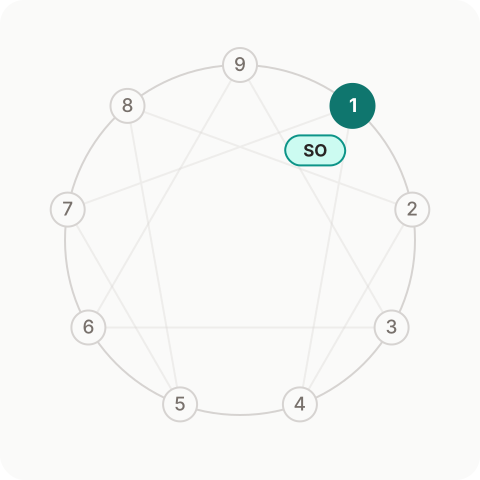
Chestnut names this subtype Non-adaptability: the social One doesn’t bend to the group’s way — it models the right way for the group. Where the SP One perfects itself anxiously, the social One (unconsciously) considers itself already correct: the work is getting everyone else aligned with the standard.
How the instinct bends the passion
The One’s anger, filtered through the social instinct, undergoes a temperature change: from heat to cold. This is the cool, intellectual One — the professor, the standard-bearer, the committee’s conscience — whose anger appears as stiffness, formality and an air of quiet superiority rather than temper. The tradition’s phrase is exact: anger half-hidden. The main theme is control: of self (exemplary), of conduct (impeccable), and — by moral gravity rather than force — of the room.
What it looks like in daily life
The social One arrives prepared, dressed correctly, opinions organized. In groups it gravitates to the rule-keeping roles: treasurer, moderator, reviewer, the one who knows the bylaws. It teaches constantly — sometimes by profession, always by demeanor — and experiences visible sloppiness in others as almost physically uncomfortable. Naranjo’s observation about this subtype’s schoolteacher energy holds across cultures: whatever the profession, the social One ends up instructing — and the instruction is genuinely good, which is what makes the pattern so stable. Friends respect it more easily than they relax around it. Its committees run on time; its friendships run on respect; its vacations run on itineraries that would survive an audit.
A scene that gives it away
The neighborhood association meeting. Someone proposes bending a rule ‘just this once.’ Watch the social One’s response: no raised voice, but a precise, patient, faintly weary explanation of why the rule exists, what bending it would licence, and how the proposer’s shortcut would look repeated by everyone. The room concedes — half convinced, half graded. The social One drives home satisfied and slightly lonely, which is this subtype’s recurring trade.
Against the other two Ones
The SP One worries and self-corrects; the SX One burns to reform specific people. The social One holds the middle register: cooler than both, less anxious than the SP, less personal than the SX — the One most comfortable saying ’this is simply how it’s done.’
How it gets mistyped
The intellectual reserve reads as Five, the procedural rigor as Six. The tell against Five: the One evaluates while the Five investigates — the social One already knows the standard and measures the room against it. Against Six: the Six follows rules for safety; the social One follows them because they’re right, and would keep them alone on a desert island.
In love and at work
At work this subtype is the institution’s spine: policies upheld, quality defended, shortcuts blocked — promotion often comes through trust rather than charisma. In love, the standards come home: the partner is respected, provided for, and quietly graded. The relationship turns when the social One learns to voice appreciation at the same volume as correction — partners of this subtype rarely doubt they’re valued for their conduct; they doubt they’re enjoyed.
Growth notes
The edge is warmth before rightness: entering one exchange per day with no teaching agenda. The superiority is a defense — being the model spares this One from being a peer, and peerhood is where its loneliness dissolves. Growth looks like getting interesting instead of exemplary: opinions held, corrections withheld, company kept. The room, it turns out, already respected the standard — what it was waiting for was the person.
Frequently asked questions
Why is the social One called 'Non-adaptability'?
Because this One doesn't adapt to the group's way of doing things — it holds up the correct way as a model. The name points at the rigidity: rules and standards outrank convenience, consensus and sometimes connection.
Is SO 1 the countertype of Type 1?
No — the countertype is the sexual One ('Zeal'), the only openly angry One. The social One's anger is half-hidden: it comes out as coldness, stiffness and a teaching, superior tone rather than heat.
How is SO 1 different from a Type 5?
The Five investigates to understand; the social One evaluates against a standard it already holds. Five detachment is curiosity conserving energy — SO 1 reserve is judgment keeping decorum.
What roles do social Ones gravitate to?
Teacher, reviewer, moderator, treasurer, standards committee — any role where knowing and keeping the right way is the job. They're excellent at them, and at risk of becoming the role.
What's the growth edge for a social One?
Trading exemplary for equal: one conversation a day with no correction and no model to uphold. Warmth practiced before rightness is what dissolves this subtype's characteristic loneliness.
Know your enneagram type. Understand yourself.
Take the free test