Enneagram Type 8 vs Type 9: How to Tell Them Apart
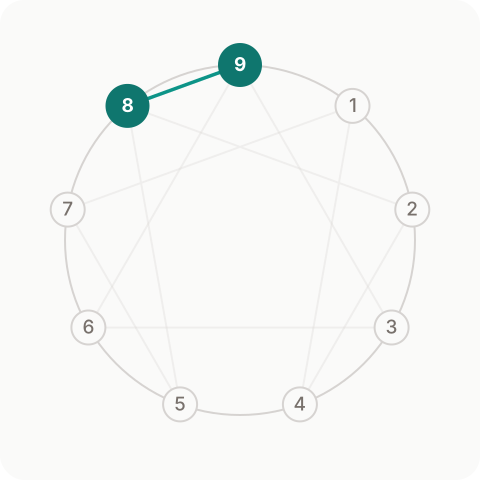
Two different engines
Type 8 (The Challenger)
runs on strength — the fear of being controlled, the drive to press its full weight into life.
Type 9 (The Peacemaker)
runs on peace — the fear of separation, the drive to keep the inner and outer world unruffled.
Where the confusion comes from
Adjacent gut types sharing the 8w9/9w8 zone: both grounded, both stubborn, both physical presences. The anger is the common inheritance — expressed immediately by one, banked geologically by the other.
The same scene, two engines
The family must decide: sell the old house or keep it. The Eight decides in a week — the numbers argued, the holdouts pressured, the matter moved — because stalled decisions are leaks and someone must captain. The Nine hasn’t voted in three months of Sundays: every side genuinely understood, every relative’s feelings held, the vote perpetually pending — because any decision this size costs someone’s peace, and the Nine is carrying everyone’s.
Two questions that settle it
- Does an unmade decision feel like a leak — or like preserved peace?
- Is your stubbornness a wall you built on purpose, or ground you settled into?
The shared surface, mapped
The tradition’s contrast for this instinctive-triad pair is directional deterioration: as they move down the levels, Eights become more angry, aggressive and domineering; Nines become more passive, disengaged and depressive — the same gut energy, one weaponized and one sedated. At their healthiest the two genuinely converge (grounded, generous, steady), which is where the mistype happens: a healthy, assertive Nine with a One wing running a family or team can read as Eight-lite. The tradition’s celebrity contrast makes the texture vivid: compare the Nines Geena Davis and Walt Disney with the Eights Susan Sarandon and John Huston — imagination and accommodation versus appetite and confrontation. Under pressure the resemblance dissolves within minutes.
Why the map itself confuses them
Wings do the heavy lifting here: the 8w9 and 9w8 sit in a genuinely blended zone, and a strong wing can outshine the core. The practical rule for neighbors: ask which side of the border your fear lives on, not your behavior — behavior is exactly what the shared wing blurs. Reading the two wing pages (8w9 and 9w8) side by side often settles what the type descriptions alone can’t.
Under load, side by side
Overload splits this pair cleanly: a stressed Eight withdraws toward Five — secretive, strategizing alone, trusting no one, and on the other side a stressed Nine frets toward Six — anxious, reactive, scanning for what could break the peace. Because both stress-faces impersonate other numbers, a difficult stretch is the worst evidence to type from — and also the best tiebreaker to remember afterwards. Note which collapse was yours, then confirm from a steadier month before you settle the question.
Three quick tells
- →Under sustained pressure, do you get louder and harder (Eight) — or quieter and foggier (Nine)?
- →Is asserting your agenda energizing (Eight) or faintly exhausting even when necessary (Nine)?
- →Do people describe you as intimidating first (Eight) or comfortable first (Nine)?
- →Do you notice conflict as an invitation (Eight) or as a cost to be avoided if possible (Nine)?
One more field note: in meetings, the Eight interrupts to redirect the agenda, while the Nine waits out the agenda and quietly outlasts it — same stubbornness, opposite acoustics.
Settle it
Still torn between The Challenger and The Peacemaker? The test separates the 8-9 confusion with dedicated forced-choice questions, and reads best alongside the full Type 8 and Type 9 profiles — weight the core-fear sections triple.
Frequently asked questions
Why do Type 8 and Type 9 get confused?
Adjacent gut types sharing the 8w9/9w8 zone: both grounded, both stubborn, both physical presences. The anger is the common inheritance — expressed immediately by one, banked geologically by the other.
What single question best separates Type 8 from Type 9?
Does an unmade decision feel like a leak — or like preserved peace? Your honest answer usually settles it faster than any full test.
What are the core fears of Type 8 and Type 9?
Type 8 fears being controlled or violated; Type 9 fears loss and separation from others. Behaviors overlap, but these two alarms never do — identify which one has been ringing your whole life and the question usually settles.
What core desire separates Type 8 from Type 9?
Type 8 wants to protect themselves and stay in charge; Type 9 wants to have inner and outer peace. Imagine both fully granted tomorrow: which one would actually let you rest? People usually know instantly — and that answer is the type.
Could my subtype explain why I test between 8 and 9?
Often, yes. The social 8 is Type 8's countertype and runs against its type's usual current, while the social 9 does the same for Type 9 — either can wear the other type's surface. If neither standard portrait fits cleanly, read both countertype pages before deciding.
Know your enneagram type. Understand yourself.
Take the free test