Enneagram Type 6 vs Type 9: How to Tell Them Apart
Two different engines
Type 6 (The Loyalist)
runs on security — the fear of being without support, the drive to anticipate what could go wrong.
Type 9 (The Peacemaker)
runs on peace — the fear of separation, the drive to keep the inner and outer world unruffled.
Where the confusion comes from
Both are loyalty-minded, steady and slow to leave anything — jobs, towns, marriages. The Nine’s calm and the Six’s vigilance even trade places under the arrows, completing the tangle.
The same scene, two engines
The storm warning hits their town. The Six executes: water stocked per the checklist that predates the warning, documents in the waterproof folder, family drilled on the meeting point — dread finally useful. The Nine putters: some candles located, the warning’s severity gently discounted, the evening spent reassuring the Six — not from data, but because alarm itself is what the Nine’s system refuses. Preparation versus peace, both calling themselves calm.
Two questions that settle it
- Is your calm built from preparation or from filtering?
- Do warnings mobilize you or mostly weary you?
The shared surface, mapped
The tradition separates these loyal, community-minded types by emotional legibility: Sixes cannot easily disguise their feelings — they grow agitated, get rattled by mishaps, become visibly nervous and defensive when they sense problems, and need to vent with others periodically to discharge fears and doubts. Nines show little sign of being upset by the day’s ups and downs, remaining strangely bland in the face of problems and able to stay silent within their own inner peace — though beneath the calm, the tradition notes, the disturbance is merely unexpressed. Both procrastinate, both seek security in belonging; but one’s worry broadcasts and the other’s buries. Watch a minor crisis: the Six narrates it aloud within the hour; the Nine mentions it, mildly, next week — if asked.
Why the map itself confuses them
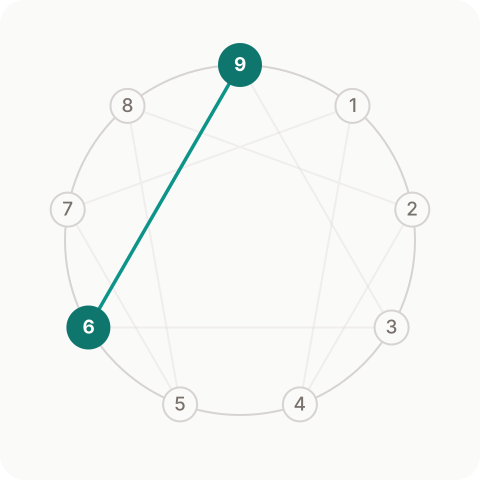
The arrows connect these two directly: Type 6’s growth line points at Type 9, so extended periods of security make a 6 genuinely wear 9’s costume — a secure 6 borrows 9-qualities so convincingly it can test as one. If you tested during an unusual season of your life, that’s the first thing to rule out: re-read both types from a calmer month. The arrows guide covers the mechanics.
Under load, side by side
Pressure rewrites both profiles at once: a stressed Six performs toward Three — workaholic proving, image management, competing for standing, while a stressed Nine frets toward Six — anxious, reactive, scanning for what could break the peace. Neither of those faces matches the type at rest, so a rough season is a misleading window for self-typing. If this page still feels unresolved, reread both profiles from a calmer month — and pay attention to the road each of you takes back to baseline, which is often more telling than the strain itself.
Three quick tells
- →Can everyone tell when you’re rattled (Six) — or does your surface stay strangely calm (Nine)?
- →Do you need to vent your worries to discharge them (Six), or do they settle silently somewhere internal (Nine)?
- →Is your steadiness effortful vigilance (Six) or default temperature (Nine)?
- →Before a big decision, do you consult everyone and still worry (Six) — or delay comfortably until it decides itself (Nine)?
One more field note: both say yes to keep the peace, but the Six’s yes comes wrapped in follow-up questions, while the Nine’s arrives smooth, unqualified — and occasionally unexecuted.
Settle it
Still torn between The Loyalist and The Peacemaker? The test separates the 6-9 confusion with dedicated forced-choice questions, and reads best alongside the full Type 6 and Type 9 profiles — weight the core-fear sections triple.
Frequently asked questions
Why do Type 6 and Type 9 get confused?
Both are loyalty-minded, steady and slow to leave anything — jobs, towns, marriages. The Nine's calm and the Six's vigilance even trade places under the arrows, completing the tangle.
What single question best separates Type 6 from Type 9?
Is your calm built from preparation or from filtering? Your honest answer usually settles it faster than any full test.
What are the core fears of Type 6 and Type 9?
Type 6 fears being without support or guidance; Type 9 fears loss and separation from others. Behaviors overlap, but these two alarms never do — identify which one has been ringing your whole life and the question usually settles.
Can a subtype make a Type 6 look like a Type 9?
Often, yes. The one-to-one 6 is Type 6's countertype and runs against its type's usual current, while the social 9 does the same for Type 9 — either can wear the other type's surface. If neither standard portrait fits cleanly, read both countertype pages before deciding.
How do the passions of Type 6 and Type 9 differ?
Type 6's passion is fear (anticipation); Type 9's is sloth (self-forgetting). Watch a full week of your own behavior and ask which appetite quietly organized it — the passion is harder to fake than any answer on a test.
Know your enneagram type. Understand yourself.
Take the free test