Enneagram Type 3 vs Type 7: How to Tell Them Apart
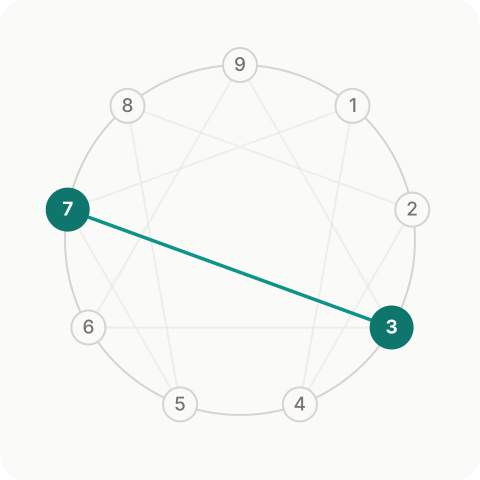
Two different engines
Type 3 (The Achiever)
runs on value-through-achievement — the fear of worthlessness, the drive to be seen succeeding.
Type 7 (The Enthusiast)
runs on possibility — the fear of being trapped in pain, the drive to keep the future stocked.
Where the confusion comes from
Both are fast, optimistic, future-facing and magnetic. Both hate being stuck. The shared velocity hides different destinations: the summit versus the horizon.
The same scene, two engines
Both work the conference. The Three works it vertically: the five people who matter identified by lunch, each conversation a step toward the keynote invitation two years out. The Seven works it horizontally: fourteen fascinating conversations, three spontaneous dinner plans, a possible podcast, a maybe-collaboration with a stranger from the elevator. The Three leaves with a plan; the Seven leaves with possibilities — and both call it networking.
Two questions that settle it
- Is your ambition a ladder or a landscape?
- Do you finish what you start because quitting looks bad — or abandon it because staying feels caged?
The shared surface, mapped
The tradition separates these fast optimists by what maintains the sense of self: the Seven is a sensation seeker — a steady stream of heightened experience makes it feel alive, and the stimulation matters regardless of whether anyone knows about the acquisitions. The Three is a recognition seeker — experience counts insofar as it builds the record and the record is seen. Both are future-facing, energetic and allergic to being stuck; the audit that distinguishes them is privacy: strip all witnesses from an achievement or adventure, and the Seven’s enjoyment survives intact while the Three’s quietly deflates. One consumes the world; the other performs it.
Why the map itself confuses them
These types share no wing border and no arrow line — the confusion is pure surface-lookalike, which makes it easier to resolve than neighbor or arrow mistypes: the engines have no structural bridge, so once you’re looking at motivation instead of behavior, the two rarely stay confusable for long. The stress-costumes are worth ruling out all the same: a stressed Three fogs toward Nine — numb, disengaged, going through motions behind the smile, while a stressed Seven hardens toward One — critical, impatient, perfectionistic about its escapes — check whether the type you tested as might be the costume of the other under load. Instinct subtypes are the other usual culprit: a countertype wears its type unusually, and can land on exactly this kind of distant lookalike.
Under load, side by side
Watch what a bad month does to each: a stressed Three fogs toward Nine — numb, disengaged, going through motions behind the smile — whereas a stressed Seven hardens toward One — critical, impatient, perfectionistic about its escapes. That divergence is useful precisely because it’s involuntary; nobody curates their overload behavior. If the calm portraits blur together, the loaded ones rarely do. Just don’t type yourself from the loaded portrait: verify against a season when things were working.
Three quick tells
- →Would the adventure still be worth it if no one ever knew (Seven) — or does unshared success lose most of its taste (Three)?
- →Is your calendar full of experiences to have (Seven) or milestones to hit (Three)?
- →Does variety itself feed you (Seven), or is it the ladder the variety serves (Three)?
One more field note: both quit stalled projects fast, but the Three quits what stopped advancing the record, while the Seven quits what stopped being interesting — different exits, same speed.
Settle it
Still torn between The Achiever and The Enthusiast? The test separates the 3-7 confusion with dedicated forced-choice questions, and reads best alongside the full Type 3 and Type 7 profiles — weight the core-fear sections triple.
Frequently asked questions
Why do Type 3 and Type 7 get confused?
Both are fast, optimistic, future-facing and magnetic. Both hate being stuck. The shared velocity hides different destinations: the summit versus the horizon.
What single question best separates Type 3 from Type 7?
Is your ambition a ladder or a landscape? Your honest answer usually settles it faster than any full test.
What are the core fears of Type 3 and Type 7?
Type 3 fears being worthless without achievement; Type 7 fears being trapped in pain or deprivation. Behaviors overlap, but these two alarms never do — identify which one has been ringing your whole life and the question usually settles.
Can a subtype make a Type 3 look like a Type 7?
Often, yes. The self-preservation 3 is Type 3's countertype and runs against its type's usual current, while the social 7 does the same for Type 7 — either can wear the other type's surface. If neither standard portrait fits cleanly, read both countertype pages before deciding.
How do the passions of Type 3 and Type 7 differ?
Type 3's passion is deceit (self-deception); Type 7's is gluttony (for experience). Watch a full week of your own behavior and ask which appetite quietly organized it — the passion is harder to fake than any answer on a test.
Know your enneagram type. Understand yourself.
Take the free test