Countertypes: When You Don't Look Like Your Type
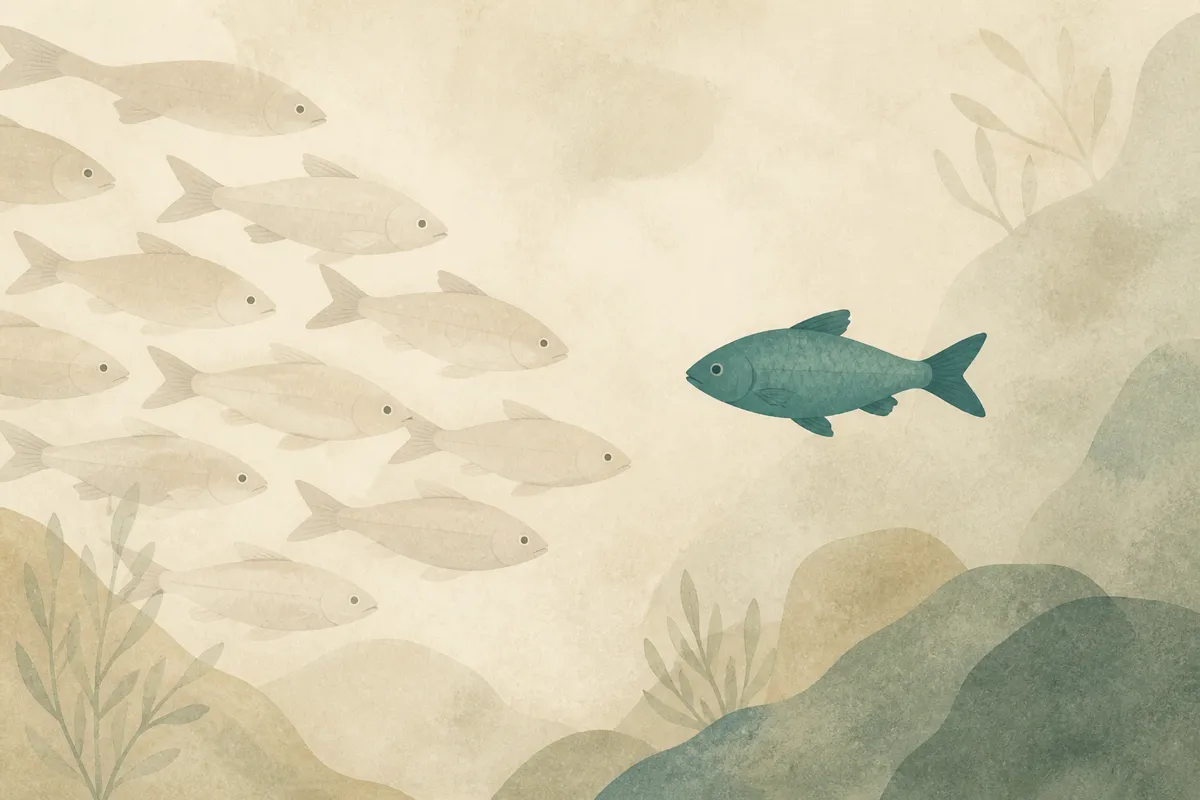
Every type has three instinct subtypes, and in each trio one runs upside-down: the countertype. It carries the type’s core passion but expresses it against the grain — which is why countertypes so often test as, and believe they are, another type entirely.
The nine countertypes in brief: the SX One reforms with heat instead of restraint; the SP Two wants to be cared for rather than caring first; the SP Three achieves quietly and distrusts applause; the SP Four suffers in silence instead of dramatizing; the SX Five makes one radical exception to its privacy; the SX Six attacks its fears (the famous counterphobic); the SO Seven defers its own appetite to serve; the SO Eight puts its power at the group’s service; the SO Nine disappears into tireless activity for the group.
If you’ve tested twice and gotten two answers, read the countertype of each. One of them may be you.
Why countertypes exist at all
The pattern isn’t arbitrary. Each type’s passion has a natural direction of flow — pride flows toward giving, fear flows toward caution, lust flows toward assertion. When the dominant instinct’s agenda conflicts with that flow, the passion doesn’t disappear; it inverts its expression while keeping its engine. The counterphobic Six is still driven by fear — that’s exactly why it attacks. The SP Four still runs on envy — it just converts the envy into stoic endurance instead of visible longing. Understanding this saves the countertype from the worst mistake: believing they’ve transcended their type when they’ve simply inverted its costume.
Spotting a countertype in yourself
Three clues, in rising order of weight. One: chronic mistyping — every test says something different, and no single description has ever felt like home. Two: you recognize a type’s fears and desires but reject its behaviors — the Four’s identity-hunger without the drama, the Six’s vigilance without the visible caution. Three, the strongest: reading your suspected type’s countertype description produces the uncomfortable recognition that its regular description never did.
Working with a countertype pattern
The growth work is the same as the parent type’s — the countertype just needs one extra preliminary step: finding the passion under the inversion. An SO Eight must first notice that its protective service is still lust (intensity, control of territory) before Eight-work lands. An SP Three must catch the quiet self-marketing inside its modesty. Once the engine is visible, every practice in the type guides applies unchanged.
The nine countertypes at a glance
Each type has exactly one: SP One (the perfectionist worrier, anger most repressed), SX Two (seduction aimed at one person, not general helpfulness), SP Three (the modest achiever who competes at not showing off), SP Four (suffering in silence, envy converted to endurance), SX Five (the romantic Five that shares its inner world with one chosen person), SX Six — the famous counterphobic — (attacking the feared thing), SP Seven (the practical networker, gluttony disguised as pragmatism), SO Eight (power in service of the group, lust bent toward protection), SX Nine (merging with one person so completely the self dissolves). If one of these paragraphs just described you better than your type’s main portrait ever has, you’ve found the page you actually needed.
Why this matters for testing
Countertypes are the largest single source of ’the test keeps getting me wrong.’ A test measures surface behavior; the countertype’s surface runs against its type’s usual current, so the SP Three reads as a One, the counterphobic Six as an Eight, the SP Seven as a Six. Our test hedges this with motivation-level items, but no instrument fully escapes it — which is why a low-clarity result with your countertype in second place deserves a manual read of both portraits. The discriminating question is always motivational: not ‘what do I do,’ but ‘what disaster am I preventing by doing it.’ Countertype confusion also runs in reverse — people who are the countertype dismiss their true type’s description as ’not me’ after reading only its most typical portrait, which is why every type page here links its countertype explicitly.
Frequently asked questions
Is the countertype a different type?
No — it's the same type with the passion expressed against its usual grain. The core fear and desire are identical; only the visible strategy inverts.
Are countertypes healthier or less healthy?
Neither. The inversion is structural, not developmental — a countertype spans the same health levels as any other subtype of its type.
Which countertype is most famous?
The counterphobic SX Six — bold, confrontational, frequently typed as an Eight. It's the case that made the whole concept visible.
I relate to two countertypes. Now what?
Go back one level: settle the core type by fear and desire first. Countertype reading works only downstream of a settled type — upstream it multiplies candidates.
Is being a countertype rarer than the other subtypes?
Not necessarily — each type's three subtypes have no established frequency data. Countertypes just get noticed more because they mistype more: their surface contradicts their type's textbook portrait, which is the whole diagnostic problem.
Know your enneagram type. Understand yourself.
Take the free test