The Three Centers: Gut, Heart, Head

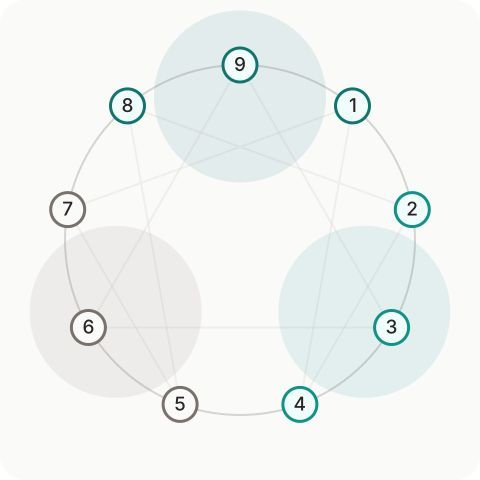
The nine types group into three centers, each organized around one core emotion. The gut/body triad (8, 9, 1) runs on anger: the Eight externalizes it, the Nine forgets it, the One moralizes it. The heart triad (2, 3, 4) runs on shame: the Two earns approval, the Three performs value, the Four claims uniqueness. The head triad (5, 6, 7) runs on fear: the Five hoards against it, the Six scans for it, the Seven outruns it.
Your center explains the flavor of your reactions before your type explains the shape. Two people can both be anxious — but head-type anxiety (what could go wrong?) feels different from heart-type anxiety (how am I coming across?) and gut-type anxiety (who’s crossing my boundary?).
If you’re torn between types in different centers, ask which core emotion is the background radiation of your life — anger, shame, or fear. That usually narrows the search to three candidates immediately.
The center’s emotion is a relationship, not a mood
The precision matters: gut types aren’t angrier than everyone, heart types aren’t more ashamed, head types aren’t more afraid. Each triad has a managed relationship with its emotion. In the gut triad, the Eight externalizes anger instantly, the Nine denies having any, the One converts it into standards — three anger-management strategies, none of which looks like simple anger. In the heart triad, the Two earns against shame, the Three outruns it, the Four inhabits it. In the head triad, the Five prepares against fear, the Six rehearses it, the Seven changes the subject. The emotion is the center’s currency; the types are three ways of spending it.
Typing by center first
When the nine types blur together, zoom out to three. The question isn’t “which description fits” but “which emotion is the background radiation of my life — the one that’s always being managed?” Persistent low-grade resentment and body-tension point to the gut; persistent self-worth accounting points to the heart; persistent scenario-scanning points to the head. Most people can locate their center in an evening of honest reflection, which cuts the type search from nine candidates to three.
The center you can’t feel
Each of us also has a repressed center — the one whose information arrives late or garbled. Head-repressed people act and feel readily but distrust their own thinking; heart-repressed people think and act but ask “what do I feel?” and hear static; gut-repressed people know and feel but stall at the moment of action. The repressed center is a better predictor of chronic life problems than the dominant one — and its slow rehabilitation is much of what the growth work actually consists of.
A worked example: one deadline, three centers
Give the same crisis — a project suddenly due tomorrow — to three colleagues. The gut-center colleague (8, 9, 1) registers it as a boundary event: the Eight pushes back on the deadline itself, the One overhauls the plan to do it right anyway, the Nine absorbs the pressure and quietly resents it. The heart-center colleague (2, 3, 4) registers it as an image event: the Two rallies to rescue whoever’s drowning, the Three sees a stage, the Four asks whether the work will still mean anything at this speed. The head-center colleague (5, 6, 7) registers it as a security event: the Five retreats to compute, the Six lists what could go wrong at this pace, the Seven reframes it as an adventure. Same fact, three physiologies.
Common misconceptions
The centers are not talents — a head type isn’t smarter, a heart type isn’t kinder, a gut type isn’t braver. Each center names the problem a triad is stuck on, not a gift: head types have the most complicated relationship with fear, heart types with shame and image, gut types with anger. That’s why the tradition places each triad’s sharpest struggles precisely in its own center’s currency. Nor is your center chosen: plenty of engineers are heart types and plenty of therapists lead from the head. If you typed yourself by profession or hobby, re-run the question through the underlying emotion instead — which of the three (anger, shame, fear) is the one you manage all day without naming?
Frequently asked questions
Can my type be in a different center than my strongest emotion?
Your type's center defines which emotion is being managed, not which you feel most. A Nine can go years without feeling anger precisely because denial IS its anger strategy.
Are the centers the same as thinking/feeling/doing preferences?
Related but not identical. Every type thinks, feels and acts; the center describes which emotional currency the pattern is built around, not a skills ranking.
How do centers help with mistyping?
They cut the search space. Torn between a Five and a Nine? That's a head-versus-gut question — which is the background emotion, fear or anger-denial? — and it usually resolves faster than trait comparison.
What's the repressed center?
The one whose data arrives late: doing (gut), feeling (heart) or thinking (head). It predicts your chronic stuck-points and is a major axis of long-term growth work.
Can my dominant center differ from my type's center?
No — your type fixes your center: an Eight is always a gut type. What varies is repression: many people use one center's intelligence fluently while their type's own center runs the show unnoticed. The centers work is noticing the home center, not choosing a favorite.
Know your enneagram type. Understand yourself.
Take the free test