Enneagram 1 and 2 Compatibility: Love & Work
In love
The improver and the helper: both duty-led, both generous. The One softens with the Two’s warmth; the Two relaxes when appreciation is spoken, not implied.
At work
Service with standards. Watch the silent ledger: the Two counts favors, the One counts errors.
The recurring fight
The signature collision: the Reformer argues from the rulebook — calm, precise, quietly furious, while the Helper argues from the ledger of everything given. What de-escalates this specific pairing: the Type-1 partner gets the valid point conceded before the rest is disputed; the Type-2 partner gets the giving acknowledged before the demand is addressed. Order matters less than both arriving in the same conversation.
What each needs from the other
The Reformer 1
From a Two, the One needs appreciation without an agenda — praise for the effort that isn’t the opening line of a favor, and warmth that survives the One saying no to being improved-at in return.
The Helper 2
From a One, the Two needs its care named out loud — the improvements noticed as love, not just logged as correctness — and one evening a week where nothing about the Two gets corrected.
Daily life together
Their household runs on complementary duties: the One maintains the systems, the Two maintains the people. Sunday looks like one partner fixing the gate while the other delivers soup to the neighbor — parallel service, different gods. The friction surfaces in the ledgers: his of errors, hers of favors, both silently kept.
When it thrives
Thriving looks like service with two dialects that finally translate: he improves what her people need, she warms what his standards build. The healthy version runs on spoken appreciation — his effort named at dinner, her care credited in public — and neither ledger ever reaches collection.
How the attraction works
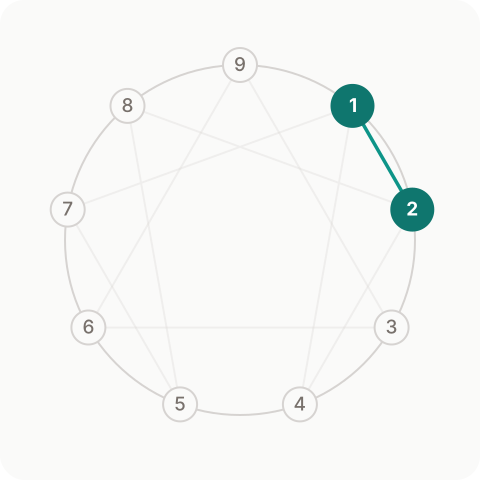
This is a documented attraction of differences: the One handles practicalities, the Two handles feeling and style. The Two carries the social ball — initiating, warming, connecting — which cuts straight through the One’s criticality and social anxiety. Meanwhile the One’s needs shine like a beacon to the Two: here is someone who needs pleasure, needs help, and feels guilty about needing anything — and the Two, constitutionally unembarrassed about meeting needs, moves in. From the other side, the Two is drawn to exactly what the One offers without trying: steadiness, dependability, love expressed through responsible action. When the Two’s emotional world shakes, the One is an anchor.
Where it strains: overtime versus juice
The documented middle-phase pattern: the One works overtime and the Two pushes for juice. Long days with no hugs leave the One feeling virtuous and drive the Two quietly frantic — from the Two’s perspective, the One’s agenda of pleasure-in-a-job-well-done reads as grim, almost punitive. The pairing shares a line to Four in the tradition’s geometry, which gives both partners an unexpected mutual fluency in disappointment: the One gets depressed when work fails; the Two, oddly, when finally secure — safety removes the performance of being needed, and what surfaces underneath is the question of being loved as-is. Handled well, that shared low place becomes the couple’s deepest meeting room rather than its basement.
At work: the throne and the power behind it
Professionally, this pair tends to organize itself with the One in charge and the Two as indispensable support — even when experience doesn’t justify the arrangement — because the One needs to be right and the Two needs to be liked, and challenging the One’s authority risks the warmth the Two runs on. It works remarkably well when the One is likable: a Two whose emotional needs are met is meticulous and highly productive. The friction pattern: One managers emphasize skills and procedures with little attention to how staff feels; the Two employee notices everything and confronts nothing, choosing service over honesty until the resentment surfaces sideways. The maintenance rule from the casework: the One says the appreciation out loud (it counts double coming from someone who audits), and the Two brings the grievance directly (the One respects the complaint it can see).
Go deeper
Treat the map above as the default physics, not the forecast — self-knowledge rewrites most of it, and levels outweigh combinations. For this pairing specifically, Type 1 vs Type 2 sharpens the individual contrast. The Pro compatibility tool goes further, including observer-mode typing for a partner who won’t take the test.
Frequently asked questions
Is a 1-2 relationship compatible?
Their household runs on complementary duties: the One maintains the systems, the Two maintains the people. Whether it thrives depends more on both partners' health levels than on the combination — this page maps where this specific pairing's friction and strength live.
What do Type 1 and Type 2 fight about?
What de-escalates this specific pairing: the Type-1 partner gets the valid point conceded before the rest is disputed; the Type-2 partner gets the giving acknowledged before the demand is addressed. Order matters less than both arriving in the same conversation.
How do Type 1 and Type 2 handle stress differently?
Their stress signatures differ, and knowing both helps: under sustained stress, Ones slide toward the moody side of Four: alienated, misunderstood, quietly despairing of ever being good enough. Meanwhile, under stress, Twos erupt into Eight's bluntness: the tally of unthanked favors becomes demands and accusations. Reading a partner's bad season through their stress arrow — instead of taking it personally — is this pairing's cheapest repair.
What growth directions help a 1-2 couple?
Each partner's growth line points the way: moving toward health, Ones relax into Seven's spontaneity: more play, more possibility, less tribunal. And for the other: moving toward health, Twos gain Four's self-awareness: their own feelings and needs become visible and speakable. A couple that names these two directions out loud can back each other's practice instead of accidentally blocking it.
What does the Type 2 partner need in this relationship?
In love, Twos lead with attentiveness — they sense needs early and meet them. They need their own needs asked about, not assumed away. Beside a The Reformer, that need is the one most worth saying out loud rather than hoping into existence.
Know your enneagram type. Understand yourself.
Start 7-day free trial